
AI Memory & Learning: Cognitive Architecture Changes 2025
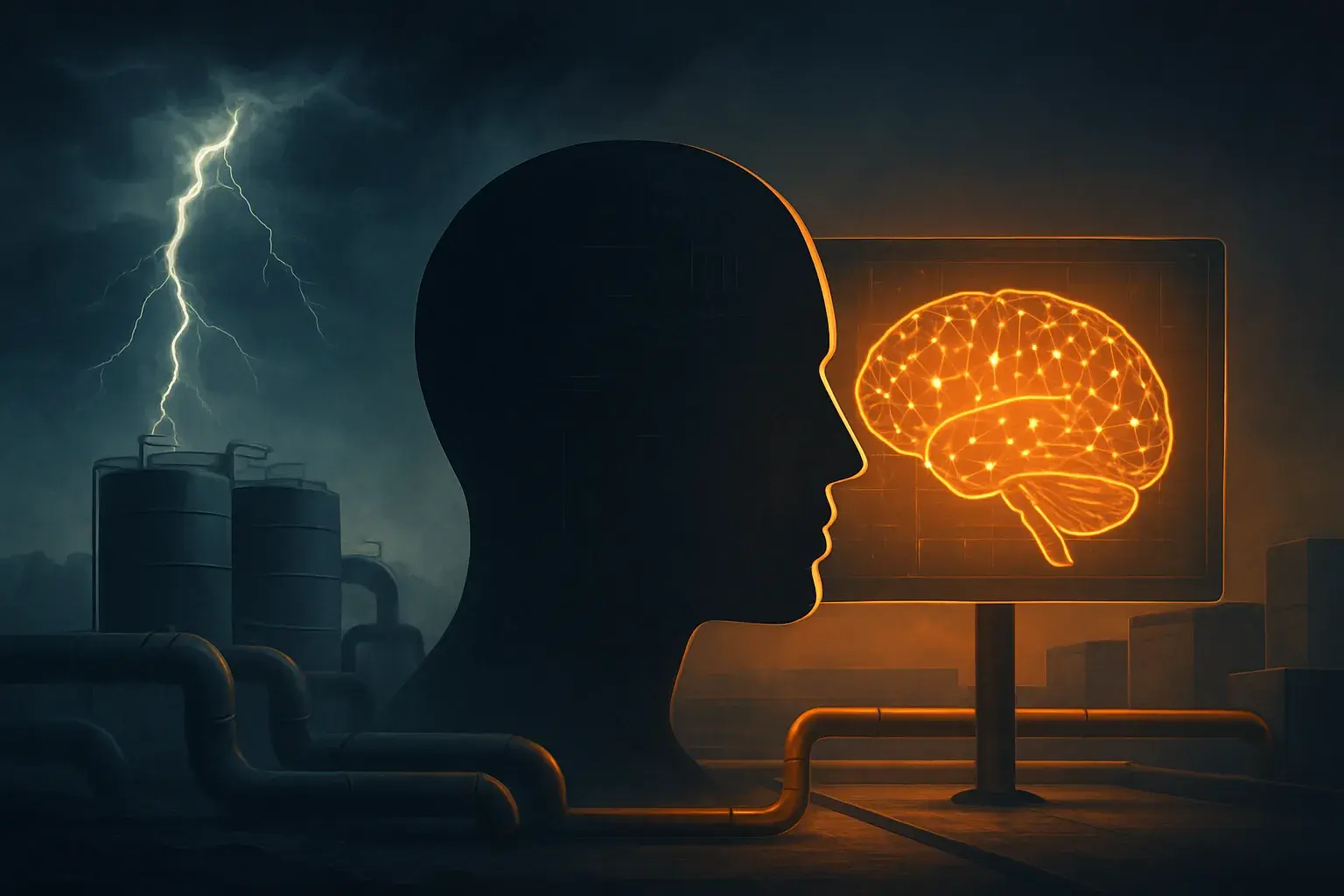
TL;DR: Discover how AI is rewiring student brains with 55% lower connectivity and what educators must do to preserve human cognitive development in 2025.
Quick Take: AI is rewiring student brains with 55% lower connectivity, forcing education to evolve beyond efficiency toward preserving human cognitive development. The crisis isn't AI's existence—it's our failure to adapt learning systems that protect uniquely human thinking while leveraging AI acceleration.
🧠 The Brain Connectivity Crisis
The MIT study revealed a striking neurological hierarchy: students using AI showed up to 55% lower brain connectivity compared to those writing without tools. This isn't just about convenience—it's about cognitive architecture
Key Finding: EEG measurements showed three distinct brain patterns:
- Brain-only writers: Highest connectivity across memory, creativity, and semantic processing regions
- Google Search users: Intermediate brain engagement
- AI users: Weakest overall neural coupling, especially in alpha and theta bands associated with deep learning
The Memory Gap: When asked to rewrite previous essays, AI users couldn't quote their own work and showed "bypassing of deep memory processes". As researcher Nataliya Kosmyna noted: "The task was executed...but you basically didn't integrate any of it into your memory networks."
📝 The Creative Paradox: AI as Golden Retriever vs. Ghost Writer
Yale's Megan O'Rourke, executive editor of The Yale Review and a professor of creative writing at Yale University, captured the seductive nature of AI assistance perfectly: "I felt like I had an intern with the cheerful affect of a golden retriever and the speed of the flash".
The Initial Benefits:
- Conserved energy for higher-order thinking
- Restored sense of agency for overwhelmed professionals
- Made daunting tasks "suddenly manageable"
The Hidden Cost:
- "A ghost with silky syntax had colonized my brain, controlling my fingers as they typed"
- Loss of connection to personal writing voice
- Interference with authentic thought processes
Critical Question: "What happens to students who've never experienced the reward of pressing towards an elusive thought that yields itself in clear syntax?"
🎯 The Two-Education Problem
Education serves two fundamentally different purposes that we've uncomfortably mashed together:
- Learning how to think and be in the world (liberal arts tradition)
- Learning economically productive skills (vocational training)
The Current Crisis: We're failing students on both fronts while blaming AI for only half the problem.
Student Perspective: As University of Minnesota student John Craycraft observed, peers consistently ask "How can I get this done fastest?" instead of "What can I learn from this?"
The default response has become: "Let me ask ChatGPT" rather than engaging with an intellectual challenge.
⚡ The Efficiency vs. Engagement Trade-off
David Foster Wallace's insight remains relevant: Education isn't about filling you with knowledge—it's about "learning how to exercise control over how and what you think" and "choosing how you construct meaning from experience".
The AI Paradox:
- For skill acquisition: AI can accelerate learning economically productive capabilities
- For cognitive development: AI may undermine the mental "muscle-building" essential for independent thought
Study Evidence: Students who switched from AI to brain-only writing showed weaker neural connectivity and couldn't engage the same cognitive networks they would have developed through unassisted practice
🔄 The Forced Evolution Opportunity
Most Optimistic Insight: AI's disruption is so profound that it will force overdue conversations about educational purpose and structure.
Proposed Solutions from Yale's O'Rourke:
- Eliminate letter grades in writing classes (pass/fail instead)
- End take-home essays as assessment tools
- Implement in-person writing labs without AI access
- Focus on in-class close reading and discussion
My Take: AI is going, in fact, it is already, forcing us to have conversations and change education in ways we should have been doing decades ago.
Embracing Lifelong Learning: Why Mastery Isn't a Sprint, It's Your Life's Marathon
💡 Strategic Framework for Leaders
The Balanced Approach:
- Preserve human cognitive development where deep thinking and meaning-construction matter
- Embrace AI acceleration for economically productive skill acquisition
- Redesign assessment methods that can't be gamed by AI assistance
- Separate learning objectives based on whether the goal is cognitive development or skill building
Bottom Line: The students graduating into an AI-dominated economy need both enhanced human thinking capabilities (to compete with AI) and advanced AI collaboration skills (to leverage AI effectively).
The crisis isn't that AI exists—it's that our educational systems haven't evolved to harness its benefits while protecting uniquely human cognitive development.
As AI advances, educators and lifelong learners must adapt and find new ways to use technology while maintaining the core of human thinking. The real opportunity is to create bold, future-ready learning environments that not only tap into AI's potential but also encourage curiosity, resilience, and lifelong growth for whatever tomorrow may bring.
Originally published at First AI Movers. Written by Dr. Hernani Costa, Founder and CEO of First AI Movers.
Subscribe to First AI Movers for daily AI insights and practical automation strategies for EU SME leaders. First AI Movers is part of Core Ventures.
Ready to automate your business? Book a call today!
About the author
- PhD in Computational Linguistics. I build the operating systems for responsible AI. Founder of First AI Movers, helping companies move from "experimentation" to "governance and scale." Writing about the intersection of code, policy (EU AI Act), and automation.
Comments
Join the discussionNo comments yet. Be the first to comment.