
AI Leadership: Bridging Technical & Human Worlds
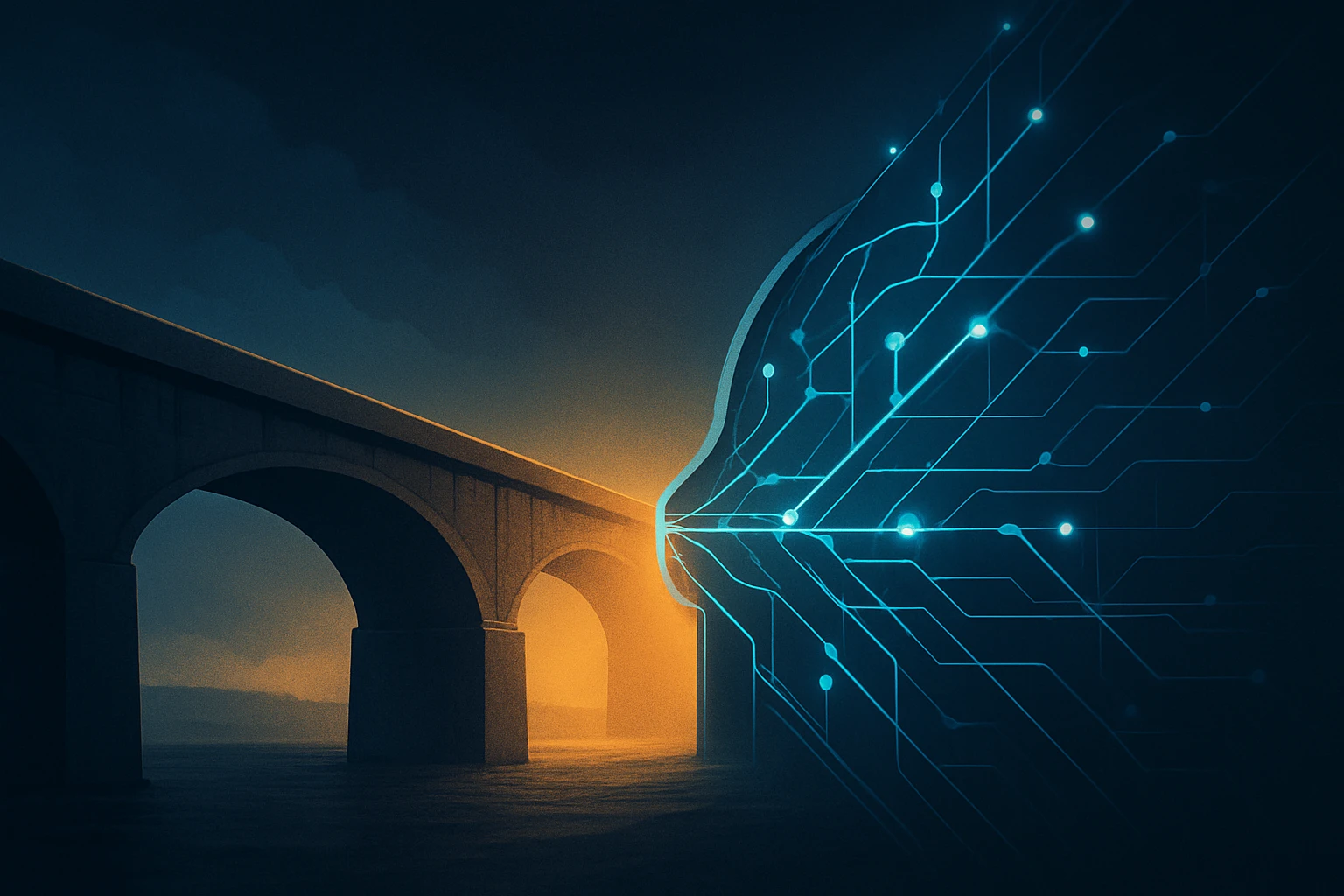
Quick Take: Successful AI leaders must master both technical expertise and human-centered wisdom. The 2025 AI Leadership Benchmark reveals 92% identify cultural challenges, not technology, as the main obstacle to AI transformation.
Bridging Worlds: The Leadership Paradox of AI-Driven Innovation
TL;DR: Discover how successful AI leaders bridge technical expertise with human wisdom. 92% of leaders cite cultural challenges as the main AI transformation obstacle.
Dr. Costa explores the intersection of technical expertise and human-centered leadership in the AI era, arguing that successful leaders must master both domains.
The Core Premise
The article opens with a personal reflection on clarity found during physically demanding cycling sessions. Costa establishes his central thesis: the most impactful innovations emerge when technical knowledge combines with human wisdom. He notes that "the best leaders don't just understand technology—they integrate it with human needs to create solutions that tackle root causes."
Key Sections
The Evolution of a Technologist
Costa traces his career progression from pure technical focus (computational linguistics and AI development) to recognizing that "while technical excellence is necessary, it is far from sufficient." The surrounding ecosystem—processes, people, and relationships—determines whether solutions become truly valuable.
Bridging Technical Depth and Human Breadth
He emphasizes that AI literacy is foundational, yet technical knowledge alone provides limited value. The real differentiator is "the ability to bridge worlds—translating between technical capabilities and human needs."
Three Essential Bridges
- Creative Synthesis: Recognizing patterns across unrelated domains to solve complex problems
- Empathetic Understanding: Listening to end-users reveals solution pathways data alone cannot
- Systems Thinking: Understanding complete ecosystems prevents solutions that merely displace problems elsewhere
The New Leadership Imperative
Costa cites the 2025 AI & Data Leadership Benchmark Survey, revealing that "92% of data and AI leaders identify cultural and change management challenges as the main obstacle to becoming AI-driven, rather than technology limitations."
He concludes that organizations need "integrators—those who can navigate the paradoxical landscape where technical excellence intersects with human wisdom."
Originally published at First AI Movers. Written by Dr Hernani Costa, Founder and CEO of First AI Movers.
Subscribe to First AI Movers for daily AI insights and practical automation strategies for EU SME leaders. First AI Movers is part of Core Ventures.
Ready to automate your business? Book a call today!
About the author
- PhD in Computational Linguistics. I build the operating systems for responsible AI. Founder of First AI Movers, helping companies move from "experimentation" to "governance and scale." Writing about the intersection of code, policy (EU AI Act), and automation.
Comments
Join the discussionNo comments yet. Be the first to comment.