
AI History: From Da Vinci to ChatGPT Evolution
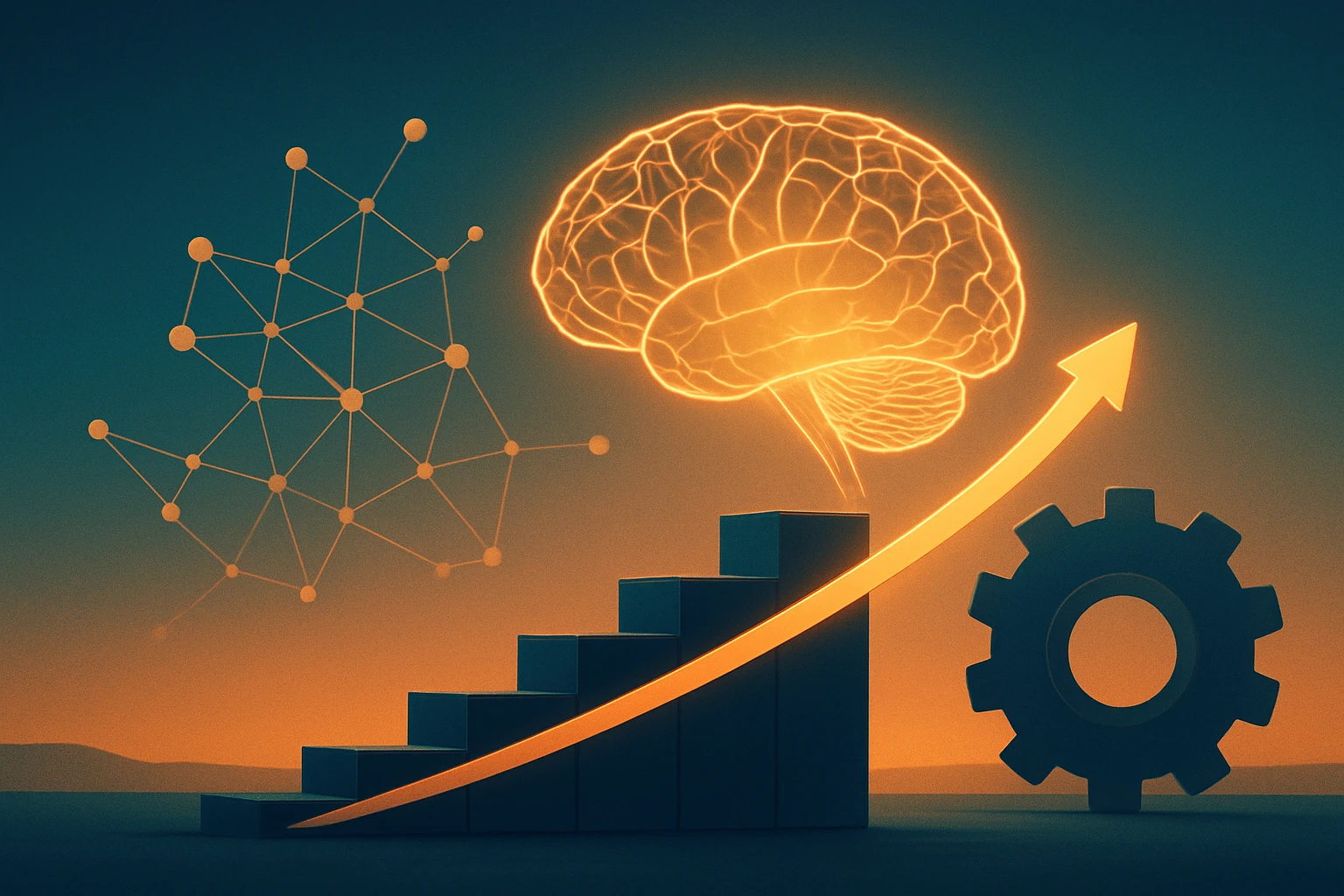
TL;DR: Explore AI's 500-year journey from Leonardo's automata to modern ChatGPT. Essential historical context for business leaders navigating AI transformation.
Quick Take: AI's journey spans 500+ years from Leonardo's automata to modern ChatGPT. Understanding this evolution helps leaders navigate today's AI transformation challenges and opportunities.
Early Foundations
Humanity's fascination with intelligent machines predates modern computing. Leonardo da Vinci's 15th-century mechanical automata represented early attempts to replicate living behavior. The 18th-century Mechanical Turk - though ultimately a hoax - sparked enduring conversations about machine intelligence.
Mathematical Groundwork
The formal AI discipline emerged through mathematical innovation. Bayes' Theorem (introduced in the 18th century) became essential for probabilistic reasoning. The 1943 artificial neuron model established foundations for modern neural networks.
The Dartmouth Summer Research Project in 1956 officially birthed AI as an academic field, with the term "artificial intelligence" formally coined.
Evolution Through Breakthroughs and Setbacks
Early innovations included the Perceptron (1958) and the General Problem Solver (1961). However, overpromised capabilities triggered "AI winters" - periods of reduced funding and skepticism. Researchers persisted, eventually achieving breakthroughs with expert systems and decision trees.
Games as Intelligence Benchmarks
Games have served as consistent testing grounds for AI progress. From chess-playing programs to Deep Blue's 1997 victory over Garry Kasparov and AlphaGo's triumph over Go champions.
The Modern Renaissance
The 21st century witnessed explosive AI advancement through internet proliferation and massive dataset availability. Deep learning revolutionized the field through layered neural networks. Large language models like GPT-3 and generative systems now produce remarkably human-like content.
Current Challenges and Responsibilities
Rapid growth demands balanced progression. Key concerns include ethical development, fairness assurance, bias mitigation, and transparency. Energy efficiency becomes critical given computational demands. Organizations seeking AI readiness assessment must address these challenges proactively.
Conclusion
The technology demonstrates both tremendous potential and significant responsibility, requiring collaborative stewardship from developers, policymakers, businesses, and society.
Originally published at First AI Movers. Written by Dr Hernani Costa, Founder and CEO of First AI Movers.
Subscribe to First AI Movers for daily AI insights and practical automation strategies for EU SME leaders. First AI Movers is part of Core Ventures.
Ready to automate your business? Book a call today!
About the author
- PhD in Computational Linguistics. I build the operating systems for responsible AI. Founder of First AI Movers, helping companies move from "experimentation" to "governance and scale." Writing about the intersection of code, policy (EU AI Act), and automation.
Comments
Join the discussionNo comments yet. Be the first to comment.