
AI Hardware 2025: Photonics, Analog Compute & Green Shift
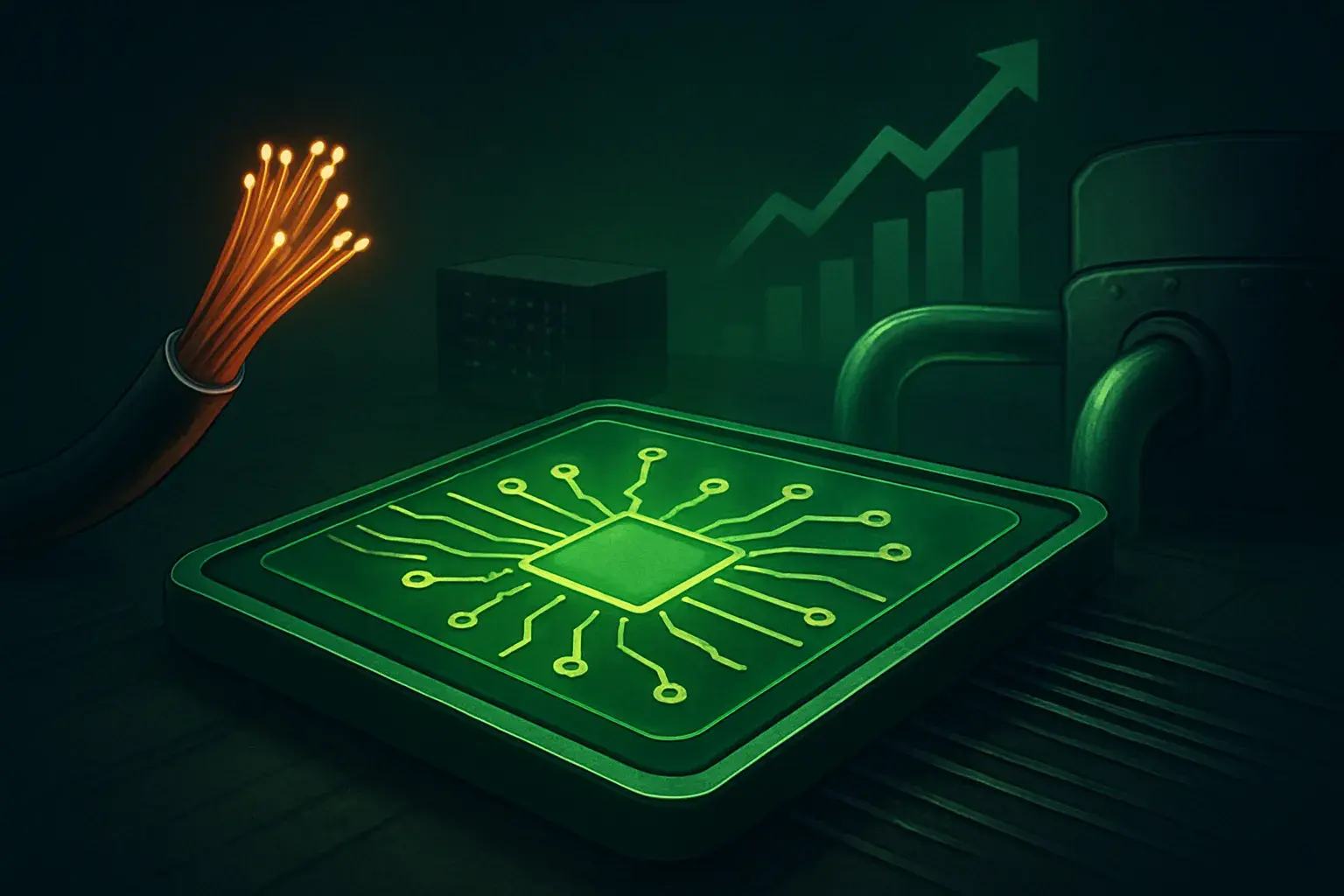
Quick Take: Photonic interconnects and analog compute are reshaping AI infrastructure in 2025. Lightmatter's photonic interposer and AMD's analog talent acquisition signal major bandwidth and power efficiency breakthroughs ahead.
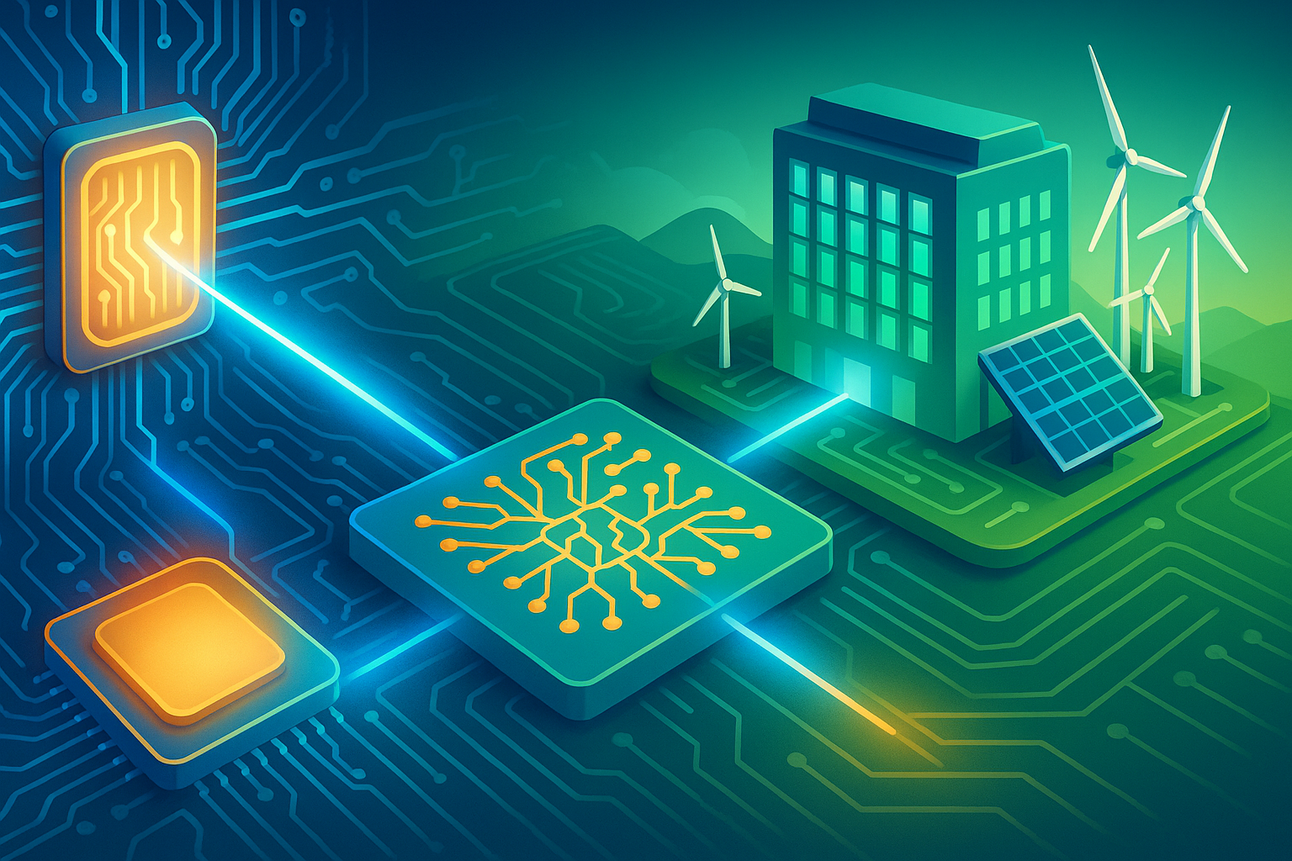
AI Hardware 2025: Photonics, Analog Compute, and the Green Shift
TL;DR: Discover how photonic interconnects and analog compute reshape AI infrastructure in 2025. Lightmatter and AMD lead breakthrough innovations for business.
By Dr. Hernani Costa — June 11, 2025
Emerging photonic interconnects, AMD's analog compute push, and open-source carbon scheduling tools reshape AI infrastructure
Good morning!
Giant models grab the headlines, yet the plumbing beneath them is changing even faster. Today's issue unpacks three strategic—but still under-the-radar—hardware moves that could tilt the AI race. Let's jump in.
Lead Story — When Light Meets Silicon: The 2025 Hardware Reset.
Two announcements in the last couple of weeks point to a future where electrons step aside for photons and analog computation:
Lightmatter's photonic interposer and chipset. The $4.4 billion startup revealed silicon-photonics parts that shuttle data between AI dies with light instead of wires, promising bandwidth leaps and major energy cuts. The interposer ships in 2025, and the chipset in 2026.
AMD snaps up Untether AI's team. The stealthy deal adds analog-compute talent and IP to AMD's growing arsenal, complementing its recent photonics buys and signaling a push to offer low-power inference chips that rival Nvidia's edge lineup.
Why AI Hardware Innovation Matters for Business Strategy
- Bandwidth ceilings are near. Training clusters already choke on I/O. Photonic layers deliver orders-of-magnitude headroom without a megawatt bill.
- Latency is user experience. Faster die-to-die hops make agent chains snappier—think voice AI without awkward pauses.
- Power is profit. Analog compute (Untether's forte) slashes joules per inference; perfect for laptops, kiosks, and anything off the data-center leash.
- Vendor chessboard shifts. AMD's photonics + analog stack narrows Nvidia's lead; early adopters may lock in better price-performance before the herd arrives.
Bottom line: If you spec hardware for 2026, photonic lanes and analog tiles should already be on your BOM radar.
Quick Takes on AI Infrastructure Developments
- EU AI Act Energy Clock Ticks—Maybe. Brussels is considering a delay on strict energy-impact disclosures, but officials insist reporting frameworks will still land by summer 2026.
- Speedata Raises $44 Million Series B. The Israeli startup's "Data-Flow APU" claims it can replace server racks with a single chip for analytics workloads.
- Arm's First AI Chip Division. Backed by SoftBank, Arm targets a 2025 prototype of its own accelerator, eyeing mass production next fall.
- Nvidia's Cheaper Blackwell for China. A bandwidth-capped variant dodges export limits, hitting OEMs at $6.5–8 k per GPU.
Tool Highlight — Carbon-Aware Scheduler (Open Source)
Need an emissions scorecard before regulators ask? Drop this MIT-licensed service into Kubernetes, tag low-priority jobs "eco," and it automatically reschedules to cleaner grid hours, cutting Scope-2 CO₂ by ~30 % in pilot tests. No code changes, just greener compute.
Strategic Implications for AI Implementation
Photon links, analog logic, and carbon ledgers are moving from lab demos to PO numbers. Question: Which hardware angle—optical, analog, or greener scheduling—hits your roadmap first? Reply and let me know; your insights drive our next deep dive.
Until tomorrow—keep the photons fast and the watts low, — First AI Movers Pro
Originally published at First AI Movers. Written by Dr. Hernani Costa, Founder and CEO of First AI Movers.
Subscribe to First AI Movers for daily AI insights and practical automation strategies for EU SME leaders. First AI Movers is part of Core Ventures.
Ready to automate your business? Book a call today!
About the author
- PhD in Computational Linguistics. I build the operating systems for responsible AI. Founder of First AI Movers, helping companies move from "experimentation" to "governance and scale." Writing about the intersection of code, policy (EU AI Act), and automation.
Comments
Join the discussionNo comments yet. Be the first to comment.